
Kenya’s Geothermal Advantage
A Blueprint for Regional Energy Security
Updated March 28, 2026
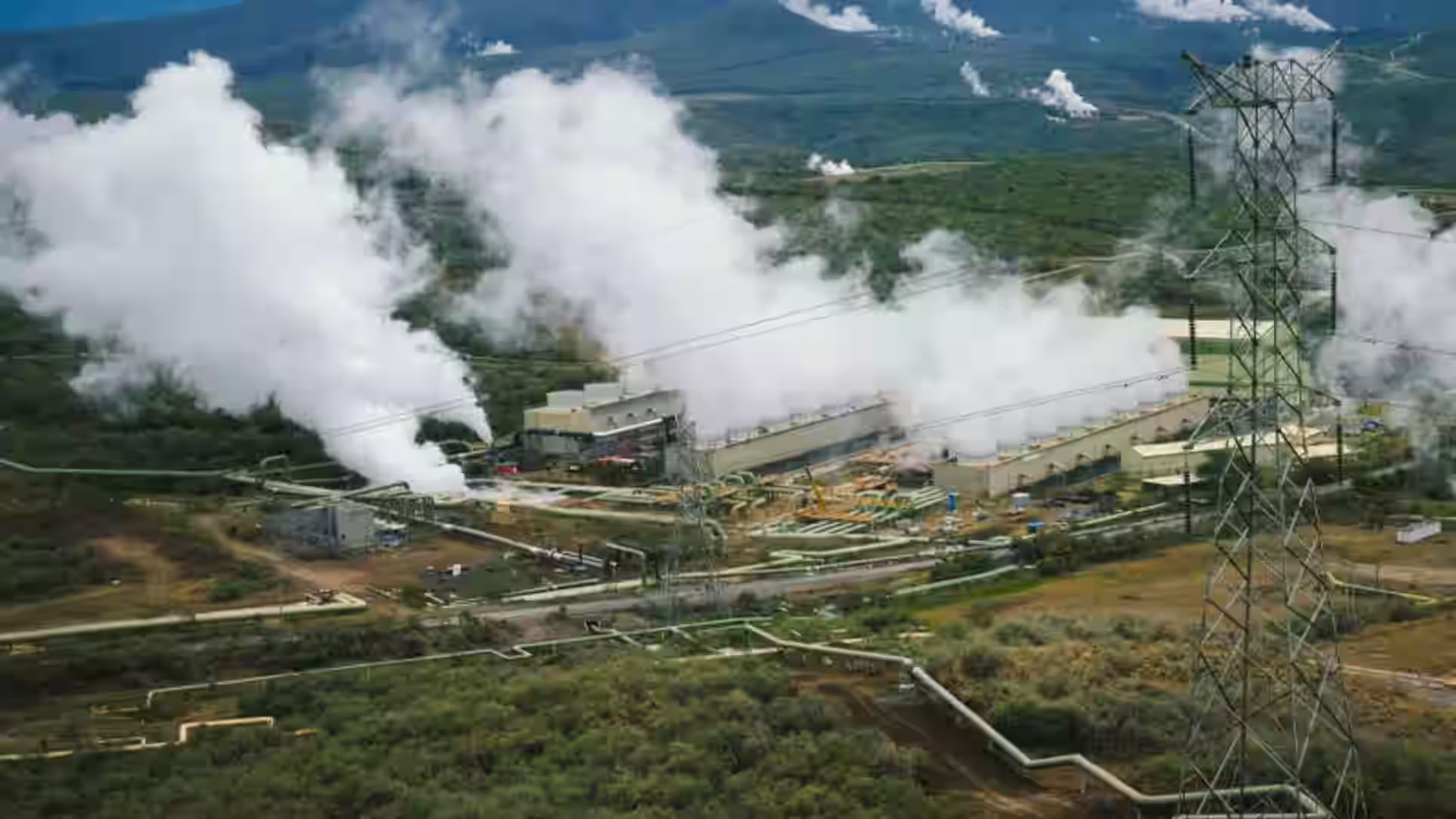
When investors evaluate energy risk in Africa, the conversation usually starts with diesel dependency, grid instability, and the cost of building off-grid solar for industrial facilities. Kenya inverts that conversation entirely. Sitting above the East African Rift System, the country has spent four decades quietly building one of the most cost-competitive and reliable electricity grids on the continent, powered substantially by geothermal steam.
This article examines why Kenya’s geothermal infrastructure is not merely an energy story but a sovereign competitiveness story, and why it is drawing attention from manufacturers, data centre operators, green hydrogen developers, and institutional investors looking for stable, long-duration assets in East Africa.
KEY TAKEAWAYS
- Kenya is the largest geothermal producer in Africa and among the top 10 globally, with over 900 MW of installed capacity at Olkaria alone.
- The cost of geothermal electricity in Kenya is among the lowest on the continent, giving energy-intensive industries a structural cost advantage.
- The East African Rift Valley holds an estimated 15,000 MW of untapped geothermal potential across Kenya, Ethiopia, Tanzania, and Uganda.
- Kenya Power and KenGen have signalled plans to scale capacity to 5,000 MW by 2030, creating significant upstream and downstream investment opportunities.
- Geothermal baseload is now central to Kenya’s pitch as a regional manufacturing and data centre hub.
DEFINITION
Geothermal energy is thermal energy extracted from the heat stored beneath the earth’s surface. In the context of Kenya and the East African Rift System, it refers to the harnessing of steam and hot water from volcanic rock formations to generate continuous, renewable electricity. Unlike solar or wind, geothermal power is not intermittent, it operates 24 hours a day, 7 days a week, making it a baseload energy source capable of underpinning industrial-scale economic activity.
Table of Content
Kenya’s Geothermal Advantage: A Blueprint for Regional Energy Security
This article is in BOH Infrastructure’s 2026 Energy and the Green Transition series. The full series establishes that Africa’s energy deficit is overwhelmingly a financing and perception problem rather than a resource one. This briefing focuses on the specific assets, corridors, and technologies that translate that argument into investable, bankable energy infrastructure.
The Rift Valley as a Strategic Resource
The East African Rift System is a geological fracture running roughly 6,000 kilometres from the Afar Triangle in Ethiopia southward through Kenya, Tanzania, and into Mozambique. Where tectonic plates are pulling apart, magma rises closer to the surface, heating underground water reservoirs to temperatures exceeding 300 degrees Celsius. In Kenya’s Rift Valley, this heat lies at commercially accessible depths, in some fields, productive wells have been drilled at under 2,500 metres.
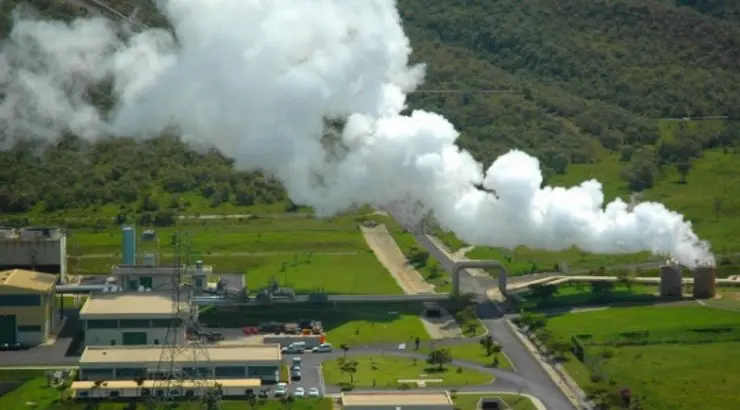
The Olkaria Geothermal Complex in Nakuru County is the centrepiece of this advantage. Operated primarily by KenGen (Kenya Electricity Generating Company), Olkaria currently hosts five power plants with a combined installed capacity of over 900 MW. It is the single largest geothermal facility in Africa and one of the most productive in the world per square kilometre of field area. The complex has expanded steadily since the first plant came online in 1981, and each successive phase has benefited from lower drilling costs and accumulated technical expertise that Kenya has developed internally over decades.
This matters for the investment thesis. Kenya is not dependent on imported geothermal technology or foreign operational expertise to grow its capacity. KenGen has trained its own reservoir engineers, drillers, and plant operators. The institutional knowledge embedded in the organisation represents a durable competitive moat.
The Economics of Geothermal Baseload
Energy cost is the single largest determinant of industrial location decisions, particularly for sectors such as cement, steel, chemicals, electric vehicle assembly, and data processing. Kenya’s geothermal electricity is currently priced at approximately USD 0.07 to USD 0.09 per kilowatt-hour for industrial consumers, a figure that is not only competitive within Africa but also compares favourably with industrial tariffs in parts of southern Europe and Southeast Asia.
This cost advantage stems from several factors. First, once a geothermal well is productive, the fuel is free. There are no commodity price fluctuations, no supply chain disruptions, and no carbon levy exposure of the kind that fossil fuel-dependent grids will increasingly face under international trade agreements. Second, geothermal plants have capacity factors, the ratio of actual output to theoretical maximum, of between 85 and 95 percent, compared to roughly 25 percent for solar and 35 percent for wind. The capital invested in geothermal generates returns across far more operating hours per year.
Third, and critically for sovereign risk analysis, geothermal insulates Kenya’s energy system from external shocks. The country does not import geothermal steam. Droughts, which periodically constrain hydropower generation (still a significant component of the Kenyan grid), have no effect on geothermal output. This intrinsic resilience is increasingly priced as a risk-reduction premium by institutional investors comparing Kenya to neighbouring countries whose grids remain oil or coal dependent.
The 5,000 MW Ambition and What It Unlocks
The Kenyan government and KenGen have outlined a target of 5,000 MW of geothermal installed capacity by 2030. The current figure sits at approximately 950 MW (including private sector contributions from Orpower, a subsidiary of Ormat Technologies). Reaching 5,000 MW would require the development of new fields beyond Olkaria, including Menengai, Longonot, Suswa, Baringo-Silali, and the Lake Bogoria corridor — all of which have undergone surface exploration and, in several cases, already have productive wells.
The Menengai field, managed by the Geothermal Development Company (GDC) with support from multilateral lenders including the African Development Bank and the Government of Japan, is the most advanced of these emerging fields. Three independent power producers have signed concession agreements to develop approximately 105 MW from Menengai steam. The model is instructive: GDC bears the upstream drilling risk, which is the most capital-intensive and technically uncertain phase, while private developers build and operate the power plants on the surface. This risk-sharing structure de-risks private capital deployment significantly.
For investors, the 5,000 MW pipeline represents not only direct power generation assets but also a cascading set of downstream opportunities. Transmission infrastructure must expand to move power from rift-located fields to Nairobi, Mombasa, and cross-border interconnectors. Specialised drilling equipment, pipe manufacturing, and well casing supply chains are underdeveloped domestically. Engineering, procurement, and construction firms with geothermal experience are in short supply across the region.
Turn Insight Into Action
We help investors, developers, and institutions move from ideas to bankable, de-risked projects across African markets.
Let’s turn your next investment into a structured success.
Regional Energy Security
Kenya as the Anchor
The East African Power Pool (EAPP) is a framework for cross-border electricity trade among 13 member states including Kenya, Ethiopia, Tanzania, Uganda, Rwanda, and Sudan. Kenya is positioned as a net power exporter under multiple EAPP scenarios, particularly to Uganda (which faces significant dry-season hydropower deficits) and Tanzania (which has abundant gas but has been slow to develop it at scale).
The Northern Corridor Power Interconnection, linking Kenya, Uganda, and Rwanda through a 220 kV transmission line, is already partially operational. An extension to the Democratic Republic of Congo is under feasibility review. Each of these interconnectors transforms Kenya’s domestic geothermal surplus into a regional export, generating foreign currency revenue for KenGen and creating energy price stability for neighbouring economies whose industrial sectors are currently constrained by unreliable supply.
There is also a direct national security dimension. Countries in East Africa that depend on expensive diesel generation or unreliable grid supply face a structural ceiling on their industrialisation capacity. Kenya’s ability to supply affordable, stable electricity to the region is therefore a form of soft power, and one that smart investors recognise as carrying long-term concession and off-take agreement value.
The Green Industrialisation Play
Perhaps the most underappreciated dimension of Kenya’s geothermal story is its alignment with global decarbonisation trends. As European and North American corporations face growing pressure to decarbonise their supply chains, manufacturing locations with clean, reliable, and cheap electricity are moving up the site selection priority list.
Kenya has already attracted attention from several EV battery assembly feasibility studies, precisely because low-carbon electricity reduces the lifecycle emissions profile of batteries manufactured in-country. A data centre cluster in Nairobi, where several global hyperscalers have expressed interest, would run almost entirely on renewable energy by default, a selling point that data centre operators in coal-heavy grids cannot easily replicate.
Green hydrogen, which requires large volumes of low-cost renewable electricity for electrolysis, is a longer-term play that Kenya is beginning to explore. Initial feasibility work has focused on using geothermal-powered hydrogen for domestic industrial use (fertiliser, refining) rather than export, but the infrastructure logic is identical to what Namibia and Morocco are developing for the European market, with the crucial advantage that Kenya’s feedstock electricity is already cheap and operational rather than still being built.
Risks and Structural Constraints
No investment thesis is complete without an honest risk register. Kenya’s geothermal sector carries three principal risks that sophisticated investors must model carefully.
The first is reservoir risk. Geothermal fields are not uniform. Wells in the same field can have dramatically different output profiles, and some productive formations decline faster than expected. KenGen has managed this risk effectively at Olkaria through careful reservoir management and well reinjection programmes, but newer fields have less data and therefore higher uncertainty.
The second is transmission and last-mile infrastructure. Generating 5,000 MW means nothing if the transmission network cannot absorb and distribute it. Kenya’s grid has experienced congestion issues, and the investment required in high-voltage transmission lines, substations, and distribution networks is substantial and not yet fully funded.
The third is the off-take and payment risk embedded in power purchase agreements with Kenya Power, which has historically carried significant debt and payment arrear exposure. Structural reforms to Kenya Power’s balance sheet and the gradual opening of direct bilateral power purchase agreements between large industrial consumers and generators are improving this picture, but it remains a material consideration for investors pricing long-duration geothermal assets.
This article is part of Energy and the Green Transition series. The full series establishes that Africa’s energy deficit is overwhelmingly a financing and perception problem rather than a resource one. This briefing focuses on the specific assets, corridors, and technologies that translate that argument into investable, bankable energy infrastructure. Read the full Energy and the Green Transition series.
Within this series:
- Kenya’s low-cost geothermal electricity positions it as a future green hydrogen producer alongside North and Southern African pioneers. → Read The Rise of Green Hydrogen in Namibia and Morocco: Africa’s New Export Frontier
- Geothermal baseload reduces Africa’s dependence on battery storage as a grid stabiliser, but hybrid systems combining geothermal and storage are emerging. → Read Battery Storage and Grid Resilience: Solving the Intermittency Gap in 2026
- Kenya’s low-cost geothermal electricity positions it as a complementary green hydrogen producer to Namibia and Morocco, with a different feedstock profile and a primarily domestic industrialisation focus in the near term. → Read Kenya’s Geothermal Advantage: A Blueprint for Regional Energy Security
Related Articles
- Regional power interconnections and trade corridors share the same multilateral financing logic. The precedents being set in geothermal infrastructure financing are directly applicable to cross-border rail development. → Read The Lobito Corridor: Reimagining Central African Logistics
- Mombasa’s port digitalisation ambitions are directly linked to the cost and reliability of Kenya’s national grid as cold-chain and automated port logistics scale up. → Read Port Modernization: Lessons from Tanger Med and Mombasa in 2026
Have you Read?
De-risking African Infrastructure Investment
Public-Private Partnerships PPPs: The Future of Infrastructure in Emerging Markets
What is the AfCFTA? An Executive Overview for Global Investors
Turn Insight Into Action
We help investors, developers, and institutions move from ideas to bankable, de-risked projects across African markets.
How We Support You
- Validate opportunities with on-the-ground intelligence
- Structure investments to manage risk and attract capital
- Connect you with trusted partners, financiers, and advisors
- Navigate regulatory, financial, and operational complexity
Why It Matters
Opportunities don’t fail because they lack potential, they fail because they’re not structured to succeed.
Partner with BOH Infrastructure to unlock strategic opportunities in Africa.
Let’s turn your next investment into a structured success.
FAQ: Geothermal Energy in Kenya
Why is Kenya a leader in geothermal energy in Africa?
Kenya sits directly above the East African Rift System, one of the most geothermally active zones on earth. Decades of investment by state-owned KenGen, supported by multilateral development finance, have translated this geological advantage into over 900 MW of installed capacity at the Olkaria complex — the largest geothermal facility on the continent.
How does geothermal energy compare to solar power for industrial investment in Kenya?
Unlike solar, geothermal is not intermittent. It operates continuously with capacity factors of 85 to 95 percent, making it suitable for energy-intensive industries that require a stable 24/7 power supply. Solar requires significant battery storage investment to serve the same industrial load, adding capital cost and complexity.
What is the investment opportunity in Kenya’s geothermal sector in 2026?
Opportunities exist across the value chain: upstream well drilling and field development (particularly in Menengai, Longonot, and Baringo-Silali), power plant construction under the GDC steam supply model, transmission infrastructure to integrate new capacity into the national grid, and downstream industrial development attracted by low-cost clean power.
How does Kenya’s geothermal advantage support regional energy security in East Africa?
Kenya is a key member of the East African Power Pool and is positioned to export surplus electricity to Uganda, Rwanda, Tanzania, and potentially the DRC through existing and planned cross-border interconnectors. Affordable Kenyan baseload power reduces diesel dependency and energy cost volatility across the region.
What is the Geothermal Development Company (GDC) and how does it reduce investment risk?
GDC is a Kenyan state-owned entity responsible for upstream geothermal resource development, including the high-cost and technically uncertain process of drilling exploration and production wells. By bearing this upstream risk, GDC allows private independent power producers to enter at the surface plant level, a significantly lower-risk entry point that has attracted project financing from international lenders.
Can Kenya’s geothermal energy support green hydrogen production?
Yes. Green hydrogen requires large volumes of low-cost renewable electricity for the electrolysis process. Kenya’s geothermal electricity, priced at approximately USD 0.07 to USD 0.09 per kilowatt-hour, is competitive for hydrogen production economics. Initial interest has focused on domestic industrial applications, with export potential being a longer-term development trajectory.
What are the main risks of investing in Kenya’s geothermal energy sector?
The three principal risks are: reservoir uncertainty in less-explored fields beyond Olkaria; transmission congestion and the capital requirements of grid expansion; and off-take risk associated with Kenya Power’s historical payment performance. Structural reforms and bilateral power purchase agreement frameworks are progressively mitigating the third risk in particular.
Share this post:
Know someone who needs to see this? Share it with them!
Ready to explore opportunities in one of Africa’s fastest-growing markets?
Investment
Opportunities in
Africa in 2026
We provide expert guidance on market entry, due diligence, and business development support.