
How the AfCFTA’s Evolving Timeline is Re-Engineering African Project Risk
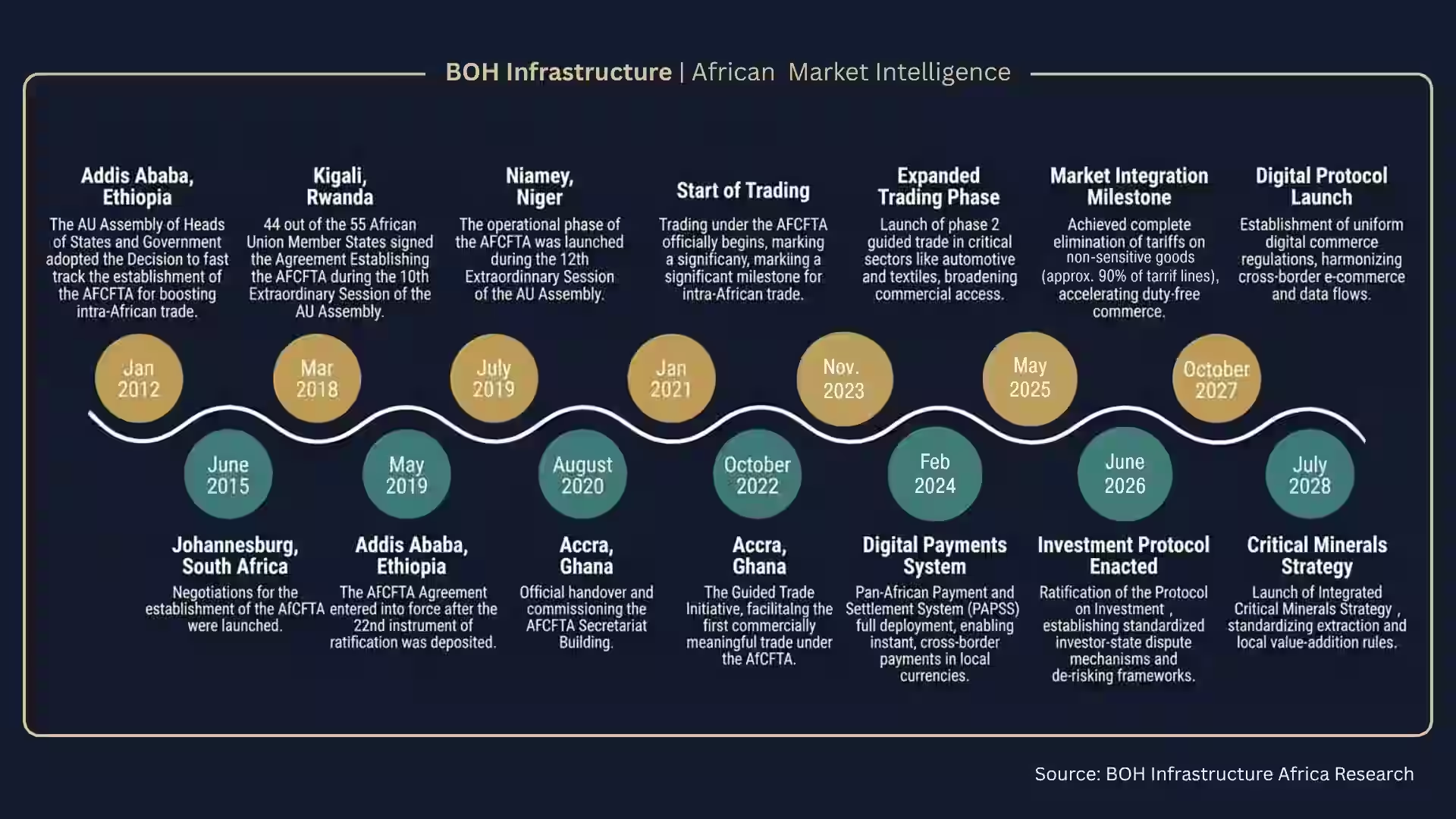
While many global analysts view the African Continental Free Trade Area (AfCFTA) through the static lens of historical signing ceremonies and broad trade data, institutional investors must view it through the lens of staged, phased execution.
The true strategic value of the AfCFTA does not lie in its past declarations, but in its forward-looking regulatory trajectory. By applying strategic foresight to existing protocols and transition windows, BOH Infrastructure has mapped the critical inflection points between 2026 and 2028. These milestones will fundamentally de-risk cross-border assets and reshape capital mobilization on the continent. Waiting for full implementation means missing the early-mover advantage; success in this evolving landscape requires moving beyond generic news and tracking active regulatory intelligence.
Table of Content
Decoding the Timeline (The Derived Dates)
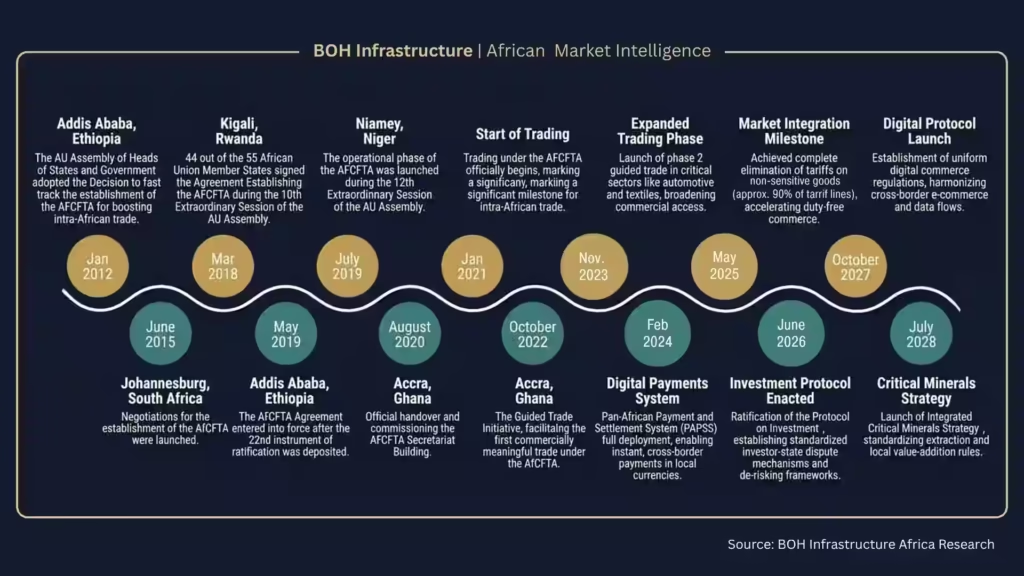
This consecutive timeline maps the evolution of the African Continental Free Trade Area from its foundational legal signatures in 2012 to its projected maturity in 2028. For institutional investors, this trajectory represents a systematic lowering of cross-border counterparty risk. The milestones forecasted for 2026 through 2028 signify transition points where isolated national projects begin to scale into bankable, continent-wide industrial assets. Source: BOH Infrastructure Africa Research.
I. June 2026: The GTI Inflection Point & Proof of Scale
The Guided Trade Initiative (GTI) originally launched as a modest pilot to test customs operations among a handful of countries trading basic commodities. However, with economic heavyweights like South Africa and Nigeria now actively engaged in the loop, mid-2026 represents a critical inflection point.
This is the shift from “symbolic trade” to “systemic reality.” As tariff reductions on 90% of non-sensitive goods begin to yield measurable macroeconomic data, lenders will finally have the “proof of concept” required to model cash flows for multi-modal trade corridors. For the first time, infrastructure is being justified by verified regional demand rather than single-nation feasibility studies.
II. October 2027: The Digital Harmonization Horizon
The adoption of the Protocol on Digital Trade triggered a standard five-year domestic alignment window for African Union state parties. By late 2027, a critical mass of Tier-1 and Tier-2 economies will have completed the domestic legislative overhauls necessary to codify this treaty into national law.
What emerges on the other side of this horizon is a legally predictable, unified digital market. Investors will benefit from standardized cross-border data flows, paperless customs invoicing, and recognized electronic contracts. This drastic reduction in administrative friction will finally allow digital infrastructure, such as regional data centers and smart logistics hubs, to scale without navigating 55 different regulatory minefields.
III. July 2028: The Value-Chain & Beneficiation Mandate
The ultimate goal of the AfCFTA is not to simply accelerate the extraction of raw materials out of the continent, but to foster localized industrialization. By mid-2028, the operationalization of standardized rules for critical minerals and local value addition is expected to reach maturity.
This mandate dictates that raw materials must be processed or utilized within regional manufacturing hubs before being exported globally. For investors in the mining and energy sectors, this signals a hard shift away from pure extraction models toward integrated “pit-to-port” and processing-plant infrastructure setups.
Align Your Asset with the AfCFTA Future.
We help investors, developers, and institutions move from ideas to bankable, de-risked projects across African markets.
Let’s turn your next investment into a structured success.
Strategic Implications for Investors
To help your team or clients digest these shifts quickly, here is the breakdown of how these regulatory timelines translate directly into asset strategy:
| The Regulatory Shift | The Impact on Project Risk | The Strategic Investor Move |
| Tariff Elimination & Scale (2026) | Drastically reduces the “logistics tax” on raw materials and manufactured components moving across borders. | Target Special Economic Zones (SEZs) that sit on multi-modal trade corridors. Focus on funding regional supply chains rather than isolated, single-country markets. |
| Digital Protocol Alignment (2027) | Decreases transaction friction, limits arbitrary border delays, and provides a unified legal framework for electronic contracts and fintech settlement. | Invest in “Hard Tech” Infrastructure. The demand for localized data centers, smart-grid tech, and digitized logistics hubs will skyrocket as legal barriers fall. |
| Local Beneficiation Focus (2028) | Shifts the focus from simple raw material extraction to local processing (e.g., turning raw lithium into battery components before export). | Form Joint Ventures with Sovereigns. Align capital with national industrialization goals. Fund the energy and transport infrastructure required for processing plants. |
Conclusion
The AfCFTA is rapidly transitioning from a diplomatic ambition to a highly complex, living laboratory for African prosperity. It is actively redefining the risk profiles of energy, transport, and digital assets across the continent.
Navigating this transition requires more than a standard feasibility study; it requires active, predictive regulatory intelligence that understands where the puck is going, not where it has been. Partner with BOH Infrastructure to ensure your pipeline is aligned with the coming waves of continental integration.
Have you Read?
De-risking African Infrastructure Investment
Ghost Projects and How to Avoid Them
What is the AfCFTA? An Executive Overview for Global Investors
Public-Private Partnerships PPPs in Emerging Markets
Turn Insight Into Action
We help investors, developers, and institutions move from ideas to bankable, de-risked projects across African markets.
How We Support You
- Validate opportunities with on-the-ground intelligence
- Structure investments to manage risk and attract capital
- Connect you with trusted partners, financiers, and advisors
- Navigate regulatory, financial, and operational complexity
Why It Matters
Opportunities don’t fail because they lack potential, they fail because they’re not structured to succeed.
Partner with BOH Infrastructure to unlock strategic opportunities in Africa.
Let’s turn your next investment into a structured success.
Share this post:
Know someone who needs to see this? Share it with them!
Ready to explore opportunities in one of Africa’s fastest-growing markets?
Investment
Opportunities in
Africa in 2026
We provide expert guidance on market entry, due diligence, and business development support.
